May 132013
 

English: Small plants grow in the blazing Carr...

How to succeed when you feel like giving up

Let’s face it. Following a big dream isn’t easy. It involves a lot of risk and effort nicely combined with a huge chunk of uncertainty. While we often read of inspiring achievements and fantastic results, we rarely hear about the sleepless nights, the bouts of confusion, the knock-backs and the anxiety.

The truth is, if it was easy to make a big dream happen we’d all do it. There are many would rather keep on living in the ‘land of blah’ than put themselves in a situation that involves so much discomfort. Others try but when things going awry, give up and revert back to the safe old ways.

So what is it that pushes others all the way, what helps them achieve what they want regardless of what gets in their way?

Enter Salvatore Maddi, a psychologist who spent 12 years studying what helped people thrive in a difficult environment and we get our answer.

While we might think that success in a tough environment is related to intelligence or experience or luck, Dr. Maddi discovered that it is related to something different. All the people who thrived in a tough environment had one key thing in common and that key thing was RESILIENCE.

With resilience there’s some bad news and some good news.

People who have faced a lifetime of adversity show higher levels of resilience. This is probably why we often hear of super-stars who attribute their difficult childhood to their determination to succeed - Oprah Winfrey is a great example of this.

The bad news is that if you’ve had an easy life so far, chances are you may need to work on your resilience.

The good news is that resilience is a SKILL that we can all learn and develop. It’s not something that we’re either born with or without but something that we can nurture and grow.

So here are some quick tips you can use to help you feel more resilient when the going gets tough.

Resilience-building tips

Identify your resilience-killing thinking

Are you telling yourself that you can’t cope or that you’ve got everything to lose? Write these thoughts down and check whether you’re being realistic or a tad dramatic.

Replace them with resilience building thoughts.

Consider someone you know, or know of, whom you think would deal with this in a resilient way. (Richard Branson always works for me). Channel this person and think of what their thinking would be in this situation.

Take control

Focus on 1 action you can take to help you move forward and go do it. When it’s done focus on 1 more action and repeat.

Connect

This is especially important if you’re feeling isolated. Talk to someone who you know can make you feel better. Join a group of like-minded people and ask for support. (Incidentally I have created a Facebook Group for people who are following big dreams – e-mail me at [email protected] if you’d like to join and I’d be thrilled to add you to the group).

I hope you find these tips useful and I’d love to hear how you’ve used them.


What other strategies do you use to stop yourself from giving up? Share these in the comments below - you might make a huge difference in someone else’s life.


Enhanced by Zemanta
Apr 302013
 
English: Seedling Deutsch: Sämling

English: Seedling Deutsch: Sämling (Photo credit: Wikipedia)

Are your dreams safe from your friends?

A few weeks ago the1bigthing’s Facebook page received its first negative comment. It was to be expected. After all when we put our thoughts and opinions out there we’re bound to get people who don’t agree with us. What was less expected however, was that the comment was made by a friend.

I brushed it off at the time but have recently realised that the comment made me abandon all efforts to post inspiring quotes on the page. An idea I had only started to put into practice the day before. It surprised me to think that a small, thoughtless gesture could have such a big impact on my behaviour.

It got me thinking that our ideas, just like our dreams are very fragile when they start out, quite similar to a little vulnerable seed that’s just been planted. They’re extremely sensitive to their environment and that includes other people’s reactions to them.

Have you ever shared a dream with a friend or a loved one only to have them advise you against it with a version of ‘I’m only saying this for your own good?’ Doesn’t feel great does it?

The sad thing is that while the perpetrator will instantly forget about their comment the minute they leave your company, the effect of their words will linger like a thick icy frost on your little seedling. Before you know it, the dream is dead.


So what can we do about it?

Our seedling dreams need to be nurtured and protected until they are strong enough to withstand the elements. In come The Greenhouse Tactics. (I know I know, I’m totally stretching out the analogy here.)


4 Greenhouse tactics that will protect your dream:

  1. Give the dream time to grow before exposing it to the elements. Keep it to yourself for a while. Give yourself time to think about it and let it develop.
  2. Assess the terrain. Before sharing specifics ask your friend’s opinion about the subject in general. So if you were thinking of leaving your job to go travelling for a year, ask your friend what they think about long-term travel. If they have an aversion to it, that’s a pretty good sign they’re not the people to share your dream with. Remember at this point your main aim is to let your idea grow, not to convince anyone of its merits.
  3. If you want to share it with someone close to you, make a request beforehand. Ask them to help you brainstorm ideas on how to make it happen. If the conversation starts on this note it’s much more likely they’ll continue to support the idea.
  4. Give it a boost. Find someone else who has made a similar dream happen. Talk to them about it, get their ideas and suggestions. Find out what they wish they knew before starting.


I hope these tactics help you protect your dream and let it grow. Keep in mind that this is YOUR dream. It doesn’t need to please anyone else but you (unless you’re trying to get someone to do it with you of course).

I’d love to hear your experience with this. Have you been supported in the past? Or has someone tried to discourage you? How did you deal with it? Pop your answers in the comments box below - you might be helping someone in a similar situation to you.

With love
Karen

x


Enhanced by Zemanta
Mar 112013
 

the1bigthing - discover your purpose

How do you discover your purpose? What are you meant to do in life?

Do you battle with these questions? I have, and so do my clients. It’s a question worth answering. Doing work that feels meaningful can significantly increase levels of happiness. This post will show you an effective way to discover your purpose. I hope you find it as useful as I did on my own personal quest to discover what I was meant to do in this life.

First let’s look at some assumptions that are getting in the way.

Assumption 1 - We will go from confusion to clarity in one quick step

When we start this search we generally expect that an answer will suddenly appear before us. That in one flash of inspiration all will be clear. I know I expected it, even though I should know better. Re-connecting with our purpose can take time. It’s more like peeling the layers of an onion than pulling back the curtains to see what on the other side.

Assumption 2: There is one single thing that we are meant to do in this life

This assumption is often created by the question we get asked as children. “What do you want to be when you grow up?” It continues to be reinforced by our schools that expect us to choose at a young age between science and art, language and I.T. I remember in my school the clever girls got to do sciences and the rest did art. How misguided is that?

The final seal is made at University where we spend between four to six years specialising in one subject.

What if I had to ask you to choose a single meal you would eat for breakfast, lunch and dinner, every day from now until the end of life? You’d be aghast.

So why should we expect ourselves to pick one job that is going to satisfy us for the duration of our lives?

Assumption 3: Our purpose is something to be found

As soon as I wrote this assumption I realised that the original title for this post was “How to find your purpose”. Oops

The language we use when we talk about our purpose does not help us. It creates the idea that our purpose is something that can be found outside of us. One day we will bump into someone doing that perfect thing we would love to do, or we will read about it in a book, or see it on T.V. and all our questions will be answered.

Our purpose is not something we find. It’s something we discover within our selves. It’s something we re-connect with.

Deep down we all know what we want. The problem is that over time we just stop listening to ourselves. We are so busy trying to do the right thing, fit in, be liked or look good that instead of doing what we want, we do what we think we should and in the process we lose touch with ourselves.

So how do we re-connect with our purpose?

Step 1: Pay attention

Notice the things that completely absorb you, that make you lose track of time.

Notice what makes your heart sing, what lifts you or give you an extra spring in your step.

Notice what excites you.

Notice what makes you happy.

Notice what gives you a sense of meaning or satisfaction.

Notice what makes you sad.

Notice what riles you or makes you angry.

Notice what sucks the energy out of you.

In short, if your emotional life looked like a heart monitor notice what creates the peaks and troughs.

Notice and write these down.

If we spend a few weeks capturing what we notice we will end up with a list of ‘clues’ about what creates positive and negative emotions in our lives. We can then start putting the picture together in order to arrive at our purpose.

Step 2 – Discover your values

One of the most significant ideas I learnt in psychology is the idea of values. Values are the essence of who we are. They drive us, give us a sense of meaning when they are being honoured and make us feel like crap when they’re not.

When we look at our clues we’re likely to notice themes about what makes us happy or sad, elated or frustrated. These themes relate to our core values.

Having gone through your clues, have a look at the list of values below and pick between one and three values that represent the themes in your clues. Feel free to add your own values to the list – remember you know best.

If you’re finding it hard to choose three or less, pick more and then compare them against each other.

Justice Freedom Contribution Love Connection An exciting life
Self-Respect Happiness A beautiful world Peace Learning Family Security
Accomplishment Wisdom A comfortable life Pleasure Social Recognition


Step 3 – Discover your strengths

The second thing that’s going to help comes from the world of Positive Psychology: Your Strengths.

These are things you are naturally good at. The operative word here is ‘naturally’. Our strengths aren’t things that we’ve learnt to be good at over time. They are things we were born good at. It’s an important distinction.

Research shows that we are more likely to thrive and succeed if we focus on what we’re naturally good at and use those strengths as often as we can. So an important part of discovering what you want to do with your life is discovering your strengths.

WE LOVE TO DO THINGS WE’RE NATURALLY GOOD AT

If you know what you’re NATURALLY good at, (i.e. your core strengths) then you know what you want.

Two key contributors to the field of positive psychology have written seminal books on this subject. Martin Seligman wrote Authentic Happiness and Mihaly Csikszentmihalyi (chick-sent-me-high) wrote Flow.

You can do a few things to discover what your strengths are.

  1. Go back to your clues and look at the things that make you lose track of time, or give you a sense of meaning. What themes emerge around the skills or abilities you were using?
  2. Ask a variety of people who know you well these two questions: What do you think I’m particularly good at? What kind of advice would you come to me for?
  3. Use a questionnaire. You can find a free one called The Via Survey here. My favourite questionnaire comes from Gallup. You will need to buy their book Strengthsfinder 2.0. It has a free code you enter on their website to gain access to a strengths questionnaire. I love this resource I couldn’t recommend it highly enough.

Step 4 – Discover your interests

Finally make a list of all the things that interest you. Use these questions as a guide:

What do you read about in your spare time?

What types of blogs do you subscribe to?

When you’re online what website do you go to?

What hobbies do you have?

What kind of people do you enjoy being around?

What inspires you?

Who inspires you?

What environments do you enjoy being in?

If you find it hard to answer some of the questions start by thinking about what you don’t want, or don’t like. Then find an alternative to this.

Step 5 - Put it all together

I talk about Values, Strengths and Interests because they make up my definition of our purpose, which is:

Our purpose is the expression of our values through our strengths, in an area that interests us.

This is a little bit vague and abstract so let’s look at an example.

Jack and Sue both have a similar strength – Creativity. They also have a similar interest – design. However while Jack’s key values are Social-Recognition and Family Security, Sue’s values are Freedom and Contribution.

As a result Jack set up his own design consultancy and manages a team of 100 people. Sue is a location-independent designer who travels the world, designing websites for charities.

So now turn back to your information, look at your core values, strengths and interests. Brainstorm ideas that will help you express your values, through your strengths in an area that interests you.

The best thing you will discover is that there is more than one way in which you can live your purpose.

An important lesson I learnt from my personal journey is this: This process of discovery is a work in progress. This exercise will point you in the right direction but you need to walk in that direction to gain more clarity along the way. Stop waiting for the perfect answer. Start creating a life that honours your purpose by taking a small step in the right direction today.

I’m sure you’ll enjoy the journey.

With love

Karen

x

P.S. If you’d like more support with this and you want to invest in getting some extra help, consider signing up for a Big Discovery session. I’m offering a 20% discount to the first 10 people who sign up.


Enhanced by Zemanta
Feb 212013
 

High Risk High Return


Last year I used a high risk strategy that paid off. I put myself in a position where my only choice was to succeed. It focused my mind, my attention and my energy. It was scary, but oh so worth it.

At the end of our 18 month sabbatical, Paul and I returned to London with a firm decision that we’d follow our next BIG thing. We would NOT get jobs and instead work for ourselves.

It was a huge leap of faith. We’d landed back in the middle of a recession with no place to live and no source of income. We were not sure if we were being brave or just plain crazy. Would we succeed or would we end up homeless?

Travel had instilled in us a belief that things always work out. Maybe not in the way we expect them to, but they do. It was this thought that made us decide that the scales were tipping towards the brave, if only by a fraction.

I did waver at one point and downloaded an application for a Senior Psychologist position with a great company. I felt so miserable as I went to bed that night that the first thing I did in the morning was delete the application.

It’s often the crazy risks that lead to huge returns and this one definitely did. Far from ending up homeless we spent a year doing what we enjoyed, worked our own hours and interacted with people we liked. We’ve even been able to escape to Asia for the winter. There are MANY MANY moments when we stop and think ‘holy cow this is working out!’

Yes, in the beginning I spent countless nights lying in bed questioning our decision, worrying if the work I was getting would eventually dry up. I had plan B and C and D ready to go if plan A did not work out. None of them involved getting a job. We were determined we would succeed.

It’s made me realise something that I think I’ve known on a subconscious level but never really articulated.

If we leave ourselves no choice, if we absolutely MUST succeed that’s when we’re going to make sure we will.

There’s no time for self-doubt, no time to question, just time to spend all our energies ensuring we succeed.

Now all we need is enough courage to put ourselves in that position…

With love

Karen

x

P.S. What would you do today if you decided to use this strategy?


Jan 312013
 

the1bigthing.com so you think you're clever?

What have you given up, or never started because you thought ‘I’ll never succeed’ or ‘I’ll never be good enough’? If something’s sprung to mind, read on. This post is about what’s created those thoughts and what to do about it.

Psychologists have discovered that some labels we’re given as kids often have a lot to do with how likely we are to give up on things as adults.

Regardless of whether a label is positive (you’re so clever) or negative (you’re dumb), it automatically puts us in a box and treats our talent, or lack of, as fixed and unchanging. And this is a dangerous thing.

Here’s why…

Labels like ‘talented’ or ‘clever’ subconsciously tell us that we don’t need to put much effort to learn or succeed at something. So when we do have to make an effort we end up assuming that this is because we’re not that talented after all.

Test it out. Who do you think is the better guitar player – someone who’s gifted or someone who’s worked really hard at learning how to play?

See what I mean?

On the other hand labels like ‘rubbish’ or ‘stupid’ tell us that no matter how hard we try we’ll never be any good.

The common denominator in both instances is EFFORT. Both labels ignore it. They assume that our abilities and skills are FIXED, and no amount of effort will make a difference.

So when ‘Miss. Clever’ encounters a task that’s a bit more difficult to master, suddenly her ‘clever’ title is under threat. If she were really that clever she’d find this easy, surely. So ‘Miss Clever’ decides that it’s better to give up and forget about the task because then she could easily tell herself that the only reason she didn’t succeed was that she didn’t try. Her ‘clever’ status goes unchallenged.

Similarly Miss Croaky voice never bothers with singing lessons even though she’d love to sing, because no amount of effort is going to change that voice that sounds just like a fox in a fight (and if you’ve ever heard a fox fight, you know that sound is NOT pretty).

Dr. Carol Dweck defines this as having a FIXED mindset. A belief that ability is unchangeable.

It makes those of us who have been labelled positively expect ourselves to excel at something the minute we start. And if we don’t, we move on to something else lest our ‘genius’ is challenged. The same mindset makes those of us who have been labelled negatively never even try in the first place. Why bother, when it won’t make any difference.

Now if you’re shaking your head at this and thinking, this is absolute garbage - that’s a good thing. It means you’re one of the lucky ones who has a ‘GROWTH’ mindset. A belief that we can master anything….if we put in the effort.

Personally I think we can have both mindsets in different areas in our lives. For example I’ve patiently built my skills at putting websites together as I ‘get’ that it requires effort and yet I’ve given up learning to play the Ukulele because I couldn’t play a proper song when I started.

The good news is that our mindset CAN change! Let’s go back to that goal you gave up on or never started. Take a moment (ok make it 5 minutes) to reflect on these questions:

How much effort have you put into developing this skill so far?

How high are you expecting this skill to be right now?

Are these expectations realistic given the amount of effort you’ve put in?

How much effort ARE you willing to put in?

Given this amount of effort, what would be a realistic goal you can set yourself?

By when do you want to reach this goal?

So what are you going to do about it?

What’s the first step you will take?

When will you take it?

I hope this post inspires you to start something you love.

Wishing you the persistence it takes to make BIG things happen

With love

Karen

x

P.S. This post was inspired by Dr. Carol Dweck’s book: Mindset. It’s full of inspiring stories of how mindset is linked to success in sports, business and school. Read it and let your mindset be transformed.

photo credit: devangmundhra via photopin cc

Jan 162013


My current office view. In Bueng Pai Farm - Pai, Thailand.


For the past 5 days I’ve been living another long held dream of mine. I’ve escaped the British winter and am spending the next 3 months in Thailand. I’m thrilled and I hope this escape will be a yearly occurrence. Making this happen has taught me something crucial about helping us stick to our promises, goals and dreams.

The decision to leave London did not come without risks and I have to admit I’ve had quite a few sleepless nights when no one showed an interest in sub-letting our flat. I was also quite anxious about leaving London when I was getting great coaching and facilitation work as an associate of one of the best training organisations in the UK. Would they keep on giving me work on my return?

Despite this I had no doubt about my intention to get my @ss to Asia. I booked our flights over 6 months ago knowing full well that whatever it took, I would make it happen.

It got me wondering where all this certainty and confidence came from. I mean there are some things I’ve wanted to achieve for ages, what had stopped me from being this gung ho about them?

Case in point, as I was packing my belongings I came across 2 HUGE stacks of ‘when I lose a dress size’ clothes. I’ve had them for 4 years – they’re out of fashion but I cannot bear to part with them. I’ve been meaning to lose a dress size for ages but somehow I’ve never really bothered to make it happen.

So what was different about my Asia goal? What made me willing to take such a high level of risk? I’m not an unshakable, unflappable mountain of strength after all.

I think it boils down to 1 thing.

WANT vs. SHOULD

My goal to get to Asia is something I really WANT. I’m extremely connected to my desire to make this happen. I’m very clear on the WHY and the benefits I’ll get from this goal. When our subconscious is this connected to our desire we’re literally pulled towards what we want and taking action becomes a lot easier. It might still be scary, it might still give us heart palpitations but something deep inside wills us to keep going.

I’ve realised that some goals I’ve set myself in the past (like losing a dress size) are more about things I think I SHOULD be doing and therein lies the problem. SHOULD motivates no one. In fact, if you’re a little rebellious like me you might even take pleasure from laughing in the face of SHOULD and doing the exact opposite, like putting on a dress size for example (oops).

Does this mean that we can just give up on any ‘SHOULD’ goals? Not necessarily.

Armed with the knowledge that it’s the WANT goals that we enjoy making happen it might be worth looking at our SHOULD goals from a different perspective. How could you turn a SHOULD goal into a WANT one?

So while ‘losing a dress size’ does nothing for my motivation, ‘Vitality, Lightness & Energy’ might just get me to keep away from the carbs and eat my veggies.

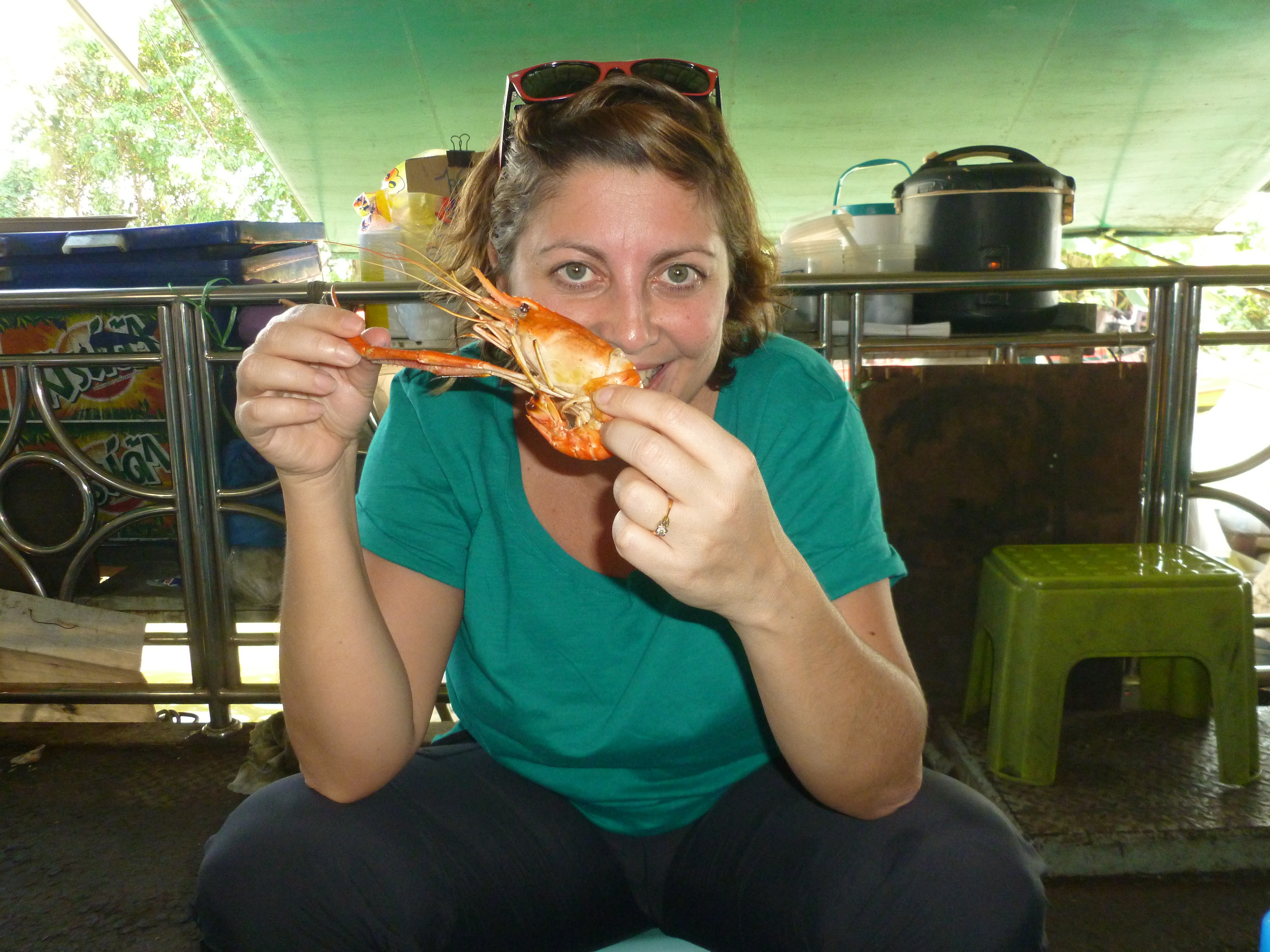
See I’m already eating more protein…at Taling Chan floating market Bangkok

How about you? Is there something you’ve been putting off for ages? Is it a WANT or a SHOULD type of goal? If you did achieve it, would your life benefit in some way? If the answer is yes it may be worth exploring how you can turn it into a WANT goal.

What benefits get you excited and motivated? How can you remind yourself of them on a daily basis?

And when you’ve turned your SHOULD goal into a WANT goal, I’d love to hear about it.

With love
Karen

P.S. Yes I did manage to sub-let my flat, and the Training company even gave me some work in Singapore & Dubai! It always works out in the end,

and if it hasn’t worked out yet, it’s not the end…..

May 282012
 

Last week I went to Abu Dhabi on a business trip. I was running some training for a group of managers and a group of graduates. I’d already been to Abu Dhabi the month before and got into the country without a glitch. This time was different….

As I went through passport control the man behind the desk looked at me with the question ‘Visa?’ I didn’t think I needed a visa and replied to that effect. Turns out I was wrong.

I was quickly ushered to the Immigration Office and the man in charge told me I had to get on the next plane back to the UK. Gulp! This meant letting down my client, about 30 people who were attending the training, plus not getting paid for a full week’s work. Clearly a MAJOR DISASTER!

I had a choice – I could either accept my fate, after all Immigration Officers are not exactly known for their flexibility, or I could try every possible thing I could think of to get into the county. I opted for the latter option.

I appealed to the man’s kindness and managed to get a 24 hour grace period before he sent me packing back home. I could stay in the airport and try and get a visa, after that I was out!

In those 24 hours I rallied the troops, and asked every single person who could help to help. I came up with 10 different options and methodically went through each option to see if it worked. Some twice, just to make sure. From transit visas, to flying to Dubai, to the Maltese consulate, to the two people I knew in Abu Dhabi. It seemed that every road took me to a dead end.

That was until I got an email, 18 hours after the ordeal started, saying that yep, there’s a man who can get you a visa in 2 hours. Send us your passport & ticket scans and check your email in 2 hours. Sure enough, 2 hours later I had my visa! Just like that, the insurmountable problem had been resolved. Hooray!!

As I bid Ahmed, the immigration officer goodbye (we’d become friends by now) and walked out of the airport I felt truly invincible.

There are two reasons I’m sharing this with you. Firstly, if you’re ever stuck in Abu Dhabi without a visa then I’ve got the right man for you. Secondly I was reminded of the door’s response to Alice, in Lewis Carroll’sAlice’s Adventures in Wonderland.

Door: “Why it’s simply impassible!

Alice: Why, don’t you mean impossible?

Door: No, I do mean impassible. (chuckles) Nothing’s impossible!”

So whatever situation you’re facing in life, when one door seems to be locked tight, move on. Look for another door because eventually, if you try enough doors, you will find one that’s ever so slightly ajar…

Have a great week!

With love

Karen

xx

Feb 082012
 

As human beings we have a natural tendency to put a lot of pressure on ourselves. Whenever we come up with a new idea or a dream we expect ourselves to execute it to perfection, first time round without any glitches.

We only have to look around us to see how false that assumption is. Do you remember the first computer you bought? I bet it wasn’t as small or as fast as the one you own now. And what about your TV? In 10 years time our kids will laugh at the bulky boxes we used to have in our living room.

The point is, we can always improve on something…AS LONG AS WE START IT.

If we dream of opening up our own business, we could start with a little side project while still keeping the day job, if we want to travel the world we could start by putting our first £100 in a savings account, and if we want to write a book we could start by writing the first page.

The trouble is that sometimes when we look at where we are, and compare it to where we’d love to be the gap seems so huge that it’s enough to stop us dead in our tracks, making us give up before we’ve even started.

Here’s a strategy that helped me overcome this paralysis when I decided to leave Malta and go and study for my Master’s degree in London. I call it ‘The Magical Blinkers’.

But before I introduce this wonderful strategy let me list all the challenges I had to face to be able to follow my dream (you don’t necessarily need to read the list, just be impressed by how long it is)

  1. Get my Bachelor’s degree in Psychology from the University of Malta to be accepted by the British Psychological Society. (This step actually took a whole year and 9 letters to the society to happen, but that’s another story).
  2. Find a British University that accepted me on their course, without an acceptance certificate from the British Psychological Society (oh I make it sound so simple).
  3. Raise £15000 in cash to pay for my tuition and lodging (yep that’s 15 with 3 zeroes!)
  4. Find somewhere to live.
  5. Find a part-time job so I could actually eat.
  6. Understand how the British Education system worked to make sure I passed my courses.
  7. Find a job in London after graduating even though I didn’t have a work permit
  8. Deal with the fact that I’d left my partner and my family back in Malta for a whole year.
  9. Give up a great job that offered me security and even a company car!

For years I’d dreamed of studying in London, and for years I assumed that that dream was way out of reach for me. Until one day, Rachel (my manager at the time) asked me a question “Why don’t you do it?” As I went through my list of reasons, something inside me shifted and a voice screamed “You silly moo, just go for it already” (or something along those lines). There and then, I decided that I was going to do it and lo and behold the “The Magical Blinkers” strategy was born.

Here’s how it works:

STEP 1: I listed all the reasons why I couldn’t go

STEP 2: I put on my magical blinkers and focused on 1 hurdle at a time. I didn’t think of the 9 other hurdles waiting for me, I just focused on the 1. I brainstormed and asked around until I found a way to jump over that hurdle and then moved on to the next one.

That’s it.

It took 1 question, 1 strategy and my life was transformed forever.

What strategies have you used to help you achieve the impossible? I’d love it if you shared your ideas in the comments below.

Much love

Karen

xx

P.S. If you enjoyed this post please share it on Facebook or Re-tweet it.

P.P.S. If you made it here from Twitter or a link from a friend, why not go ahead and make sure you never miss a thing? For a limited time, there’s a free coaching workbook ‘Find out what you really want’ for everyone who signs up. Click here to sign up


Switch to our mobile site