Karen Sargent

Karen is a psychologist and coach who escaped the corporate world and created a globetrotting lifestyle. Her base is in London but she spends winter in Asia. She runs her own business, coaching and training leaders in global organisations and is on a mission to convince the world to follow their heart. She founded the1bigthing.com to offer support and inspiration to people who want to create lives they love.

May 132013
 

English: Small plants grow in the blazing Carr...

How to succeed when you feel like giving up

Let’s face it. Following a big dream isn’t easy. It involves a lot of risk and effort nicely combined with a huge chunk of uncertainty. While we often read of inspiring achievements and fantastic results, we rarely hear about the sleepless nights, the bouts of confusion, the knock-backs and the anxiety.

The truth is, if it was easy to make a big dream happen we’d all do it. There are many would rather keep on living in the ‘land of blah’ than put themselves in a situation that involves so much discomfort. Others try but when things going awry, give up and revert back to the safe old ways.

So what is it that pushes others all the way, what helps them achieve what they want regardless of what gets in their way?

Enter Salvatore Maddi, a psychologist who spent 12 years studying what helped people thrive in a difficult environment and we get our answer.

While we might think that success in a tough environment is related to intelligence or experience or luck, Dr. Maddi discovered that it is related to something different. All the people who thrived in a tough environment had one key thing in common and that key thing was RESILIENCE.

With resilience there’s some bad news and some good news.

People who have faced a lifetime of adversity show higher levels of resilience. This is probably why we often hear of super-stars who attribute their difficult childhood to their determination to succeed - Oprah Winfrey is a great example of this.

The bad news is that if you’ve had an easy life so far, chances are you may need to work on your resilience.

The good news is that resilience is a SKILL that we can all learn and develop. It’s not something that we’re either born with or without but something that we can nurture and grow.

So here are some quick tips you can use to help you feel more resilient when the going gets tough.

Resilience-building tips

Identify your resilience-killing thinking

Are you telling yourself that you can’t cope or that you’ve got everything to lose? Write these thoughts down and check whether you’re being realistic or a tad dramatic.

Replace them with resilience building thoughts.

Consider someone you know, or know of, whom you think would deal with this in a resilient way. (Richard Branson always works for me). Channel this person and think of what their thinking would be in this situation.

Take control

Focus on 1 action you can take to help you move forward and go do it. When it’s done focus on 1 more action and repeat.

Connect

This is especially important if you’re feeling isolated. Talk to someone who you know can make you feel better. Join a group of like-minded people and ask for support. (Incidentally I have created a Facebook Group for people who are following big dreams – e-mail me at [email protected] if you’d like to join and I’d be thrilled to add you to the group).

I hope you find these tips useful and I’d love to hear how you’ve used them.


What other strategies do you use to stop yourself from giving up? Share these in the comments below - you might make a huge difference in someone else’s life.


Enhanced by Zemanta
Apr 302013
 
English: Seedling Deutsch: Sämling

English: Seedling Deutsch: Sämling (Photo credit: Wikipedia)

Are your dreams safe from your friends?

A few weeks ago the1bigthing’s Facebook page received its first negative comment. It was to be expected. After all when we put our thoughts and opinions out there we’re bound to get people who don’t agree with us. What was less expected however, was that the comment was made by a friend.

I brushed it off at the time but have recently realised that the comment made me abandon all efforts to post inspiring quotes on the page. An idea I had only started to put into practice the day before. It surprised me to think that a small, thoughtless gesture could have such a big impact on my behaviour.

It got me thinking that our ideas, just like our dreams are very fragile when they start out, quite similar to a little vulnerable seed that’s just been planted. They’re extremely sensitive to their environment and that includes other people’s reactions to them.

Have you ever shared a dream with a friend or a loved one only to have them advise you against it with a version of ‘I’m only saying this for your own good?’ Doesn’t feel great does it?

The sad thing is that while the perpetrator will instantly forget about their comment the minute they leave your company, the effect of their words will linger like a thick icy frost on your little seedling. Before you know it, the dream is dead.


So what can we do about it?

Our seedling dreams need to be nurtured and protected until they are strong enough to withstand the elements. In come The Greenhouse Tactics. (I know I know, I’m totally stretching out the analogy here.)


4 Greenhouse tactics that will protect your dream:

  1. Give the dream time to grow before exposing it to the elements. Keep it to yourself for a while. Give yourself time to think about it and let it develop.
  2. Assess the terrain. Before sharing specifics ask your friend’s opinion about the subject in general. So if you were thinking of leaving your job to go travelling for a year, ask your friend what they think about long-term travel. If they have an aversion to it, that’s a pretty good sign they’re not the people to share your dream with. Remember at this point your main aim is to let your idea grow, not to convince anyone of its merits.
  3. If you want to share it with someone close to you, make a request beforehand. Ask them to help you brainstorm ideas on how to make it happen. If the conversation starts on this note it’s much more likely they’ll continue to support the idea.
  4. Give it a boost. Find someone else who has made a similar dream happen. Talk to them about it, get their ideas and suggestions. Find out what they wish they knew before starting.


I hope these tactics help you protect your dream and let it grow. Keep in mind that this is YOUR dream. It doesn’t need to please anyone else but you (unless you’re trying to get someone to do it with you of course).

I’d love to hear your experience with this. Have you been supported in the past? Or has someone tried to discourage you? How did you deal with it? Pop your answers in the comments box below - you might be helping someone in a similar situation to you.

With love
Karen

x


Enhanced by Zemanta
Apr 162013
 

the1bigthing.com

Failure will never overtake me if my desire to succeed is strong enough.

Og Mandino

When I have conversations with people about something they would love to do but haven’t started yet there is often an underlying theme. Whilst outwardly people will say ‘I don’t have the time’ or ‘I don’t have the money’, inwardly they’re thinking ‘I could never succeed’.

Psychologists use the word ‘self-efficacy’ to describe our belief in our ability to achieve the goals we set ourselves. Research shows that when people have a high level of self-efficacy they are more likely to succeed in achieving these goals.

No surprise there. The self-fulfilling prophecy comes into full affect. You want to start an online business but you don’t quite believe you can succeed, that is to say – your self-efficacy is low. You put up your site and get little traffic. You immediately take this as a sign. ‘I knew I’d be no good at this’, or ‘I knew this wouldn’t work’. Chances are, those thoughts will make you feel quite helpless, like you have no control over the situation. As a result you are less motivated to try other things to attract customers to your site and so you enter this downward spiral that will take you further and further away from the success you desire.

The good news is that we can spin this on its head. If we look at what creates a sense of self-efficacy within us we can carefully apply these to any project we undertake. Read on to find out how to triple your chances of success.

There are 4 key things that can increase our self-efficacy. Let’s look at each one in turn and see how we can use it to our advantage.


1. Experiencing a sense of mastery

We feel this when we overcome a challenge successfully. This sense of mastery gives us the confidence and encouragement we need to keep striving.

Apply it by:

Break down your project into smaller manageable challenges. If you set yourself challenges that can be accomplished in an hour, a day, or a week you will get frequent bursts of positive reinforcement that will keep you going


2. Seeing others succeed

When we see others succeeding it increases our own self-efficacy as it gives us the message that ‘this can be done’. This is especially effective when we see ourselves as similar to the person who has succeeded.

Apply it by:

Spend time with people who are following a similar project. Find people who are a few steps ahead of you. Talk to them about their experiences. Consider starting a mastermind group. (A word of caution: Watch out for comparing yourself to people who are years ahead of you in their project as this could end up discouraging you. Remember to avoid comparing the seed of your idea to the fully grown plant that has had years to develop in someone else’s hands).


3. Surround yourself with supporters

Once again this has to do with the people you surround yourself with. When people encourage us and believe in our ideas we feel a lot more confident, capable and motivated to succeed.

Apply this by:

Avoid the ‘nay’ sayers. Be protective of your dreams and ideas. Only share them with people who will support them. If a partner or a loved one is not being supportive make a request. Tell them that what you need now above all else is their support, not their advice.

When someone puts down your dreams and ideas there could be a million reasons behind it. It is often about their own fears, pre-conceptions, assumptions, bitterness, lack of knowledge, world view, BUT RARELY about your idea. Please remember this.


4. Interpretations of your physiology

When you’re doing something challenging you are likely to experience ‘butterflies in the stomach’. How you interpret these will have an effect on your levels of self-efficacy.

Apply this by:

Instead of interpreting butterflies as fear, impending doom, and a sign that you can’t succeed, look at them as excitement, a normal reaction to leaving the comfort zone and a sign that you are stretching yourself and moving forward. Physiologically there is no difference between fear and excitement, your interpretation is what creates it.


I hope you find these tips useful in helping you believe in your ability to succeed. Now that you how to increase your self-efficacy what BIG thing will you start?


Related articles

Enhanced by Zemanta
Apr 092013
 

the1bigthing.com - Living in paradise

“The best joke of today is the weather” was my friend’s Facebook status on April Fool’s day. I chuckled as I read the comment while lying in 35-degree heat by the pool. I’d seen comments complaining about the cold in the UK for the past 3 months. They confirmed that my decision to escape to Asia during the British winter was very wise indeed.

So how does one escape to a tropical destination and spend 3 months living in paradise?

Well when I made the decision I had no clue. I just knew that it was what I wanted above all else.

I went ahead and booked our flights in July just to make sure we didn’t change our minds as winter got closer. I wanted to put us in a position of no return. Once our commitment was sealed with two expensive tickets to Thailand it sharpened our focus on what we needed to get done before the 10th of January came around.

Questions like “Can we do this?” “Should we do this?” “Is it possible?” became irrelevant. Instead we asked ourselves “What’s the first step?” “How do we cover our costs?” “Who’s done this before?”

When we struggled to find a tenant we didn’t give up, we just tried something different. Eventually we had to turn down a few interested parties. When I was tempted by offers of lucrative freelance work I had only one reply “Sorry I’m not available”. When the original island we chose turned out to be too touristy and expensive, we picked another one.

We found a solution to all our reasons not to go, because we had to.

We also discovered that when you cover London rent and bills to spend time abroad your trip suddenly becomes much cheaper. On a normal holiday you’re still paying for these when you don’t need to. A month’s rent and bills in London is enough to cover a luxurious lifestyle in Thailand for 2 months. Just by renting out our flat we’d already covered 2/3rds of the costs of the trip.

We loved our new home in Koh Lanta. We stayed in a gorgeous apartment that was 5 minutes away from the beach. We also got our laundry and cleaning done as part of the deal.

the1bigthing.com - The pool the1bigthing.com the1bigthing.com


We spent days zipping around the island on our moped and evenings watching awe-inspiring sunsets.

Sunset on Lanta


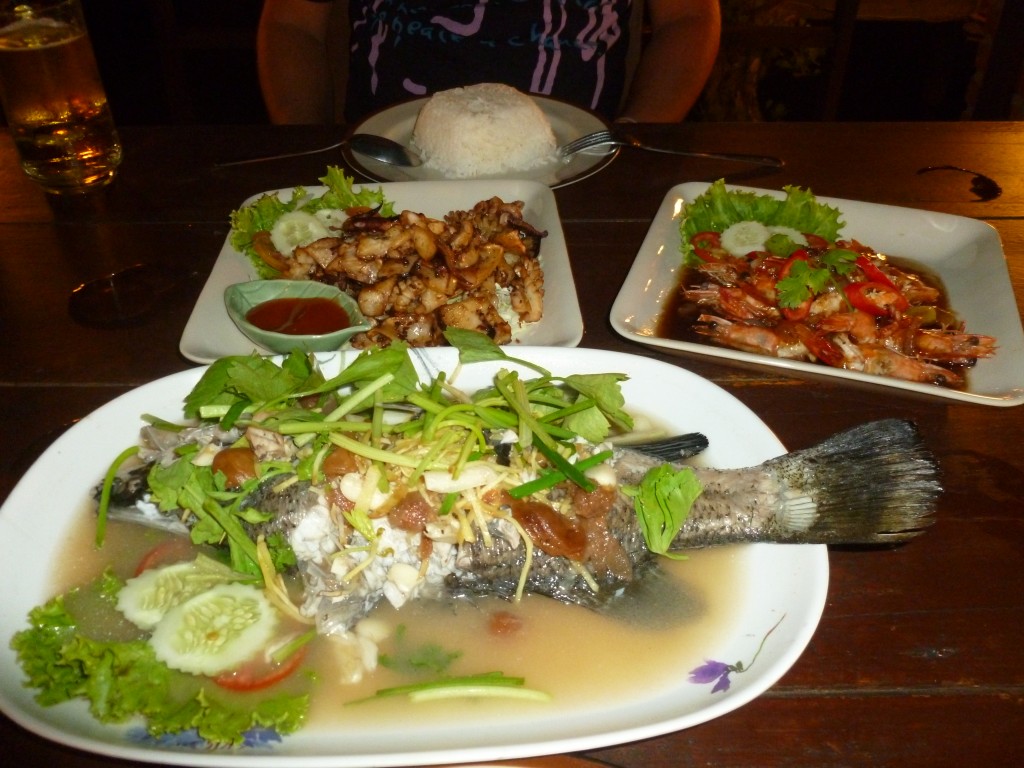
We ate out every day, feasting on fresh seafood that was so good it made me want to jump on the table on do a little jig.

Gorgeous seafood

We tested all the wonderful beaches of the island.

the1bigthing.com

We even partied with the locals at their yearly festival.

the1bigthing.com

We also worked. HARD. On our projects and ideas. It was the kind of work that made hours seem like minutes. It felt meaningful and fulfilling. There were days when we skipped the beach because we were so engrossed in what we were doing. (Who knew THAT could happen).

We haven’t won the lottery, we’re not super rich, we just had an idea and we decided to make it happen.

As we return back to London, a city we love, we are full of excitement and energy to continue working on what we’re passionate about. Even better we return back with a truly important lesson learnt:

We CAN create a life that is unique to us, that brings us alive, that fills us with joy every single day. We don’t need to have all the answers before we begin but the sooner we start building it, the sooner we’ll get there.

What would you start today if you knew you couldn’t fail?

With love

Karen

x


Enhanced by Zemanta
Mar 162013
 
the1bigthing.com

Up close and personal with Africa’s wildlife on a guided game drive

This week’s interview is special. If you’ve ever visited South Africa you know how much the country has to offer. I remember dreaming of becoming a park ranger on one of my visits there.

Well the formidable didn’t stop at the dreaming stage. She actually took the decision to make it happen, and she did! Her achievements in the past 10 years are remarkable. It goes to show that when we dream big and when we play big we make big things happen.


Jeanette Vockerodt

Jeanette Vockerodt

What was your BIG thing?

To share my love for South Africa, its wildlife, nature and its people with the rest of the world.

Tell us about your moment of truth.

In 2000 left South Africa and moved to London for a few months. On my return flight back the South African flag burned in my heart. I longed to share my passion and love for South Africa with the rest of the world. Without me knowing it, the seed of my own safari and tour operating company was sown and a dream was being birthed.

How did it feel?

I was under no illusions that this dream would take hard work and dedication but I was up for the challenge. Even though I did not have money saved up to invest in my new business venture I knew I would make it happen.

What was the hardest thing about following through?

The hardest thing was to commit to building a good and strong foundation for my business even though this would take a lot of time. The first step was to become a qualified wildlife/tourist guide, which took four years of part-time study while working full-time.

Balancing my day job with getting Imvelaphi Safaris off the ground took hard work and dedication. In 2006 I registered my company, Imvelaphi Safaris. I took small but purposeful steps, until in 2007 I took that final leap and resigned from my full-time employment to forge ahead with Imvelaphi Safaris.

It is no small feat to be an emerging entrepreneur and to break through the South African Tourism Industry. With no financial backup or family support I sold my cycling equipment in order to start funding Imvelaphi Safaris. (I used to be Road & Track Cycling Champion but had decided to stop pursuing this career as it was not bringing in any income).

Even though this was the most difficult time of my life it taught me discipline, commitment, perseverance and that after every uphill there’s a downhill - to never quit!

I was determined to avoid the typical ‘get a job and work from 8 to 5.’ I tried it, got the T-Shirt but it did not work for me.

It has taken years of hard work to build a business with a good reputation that clients know they can depend on. My passion helped me stick to my commitment and persevere until I started to see the fruit of a successful businessStanding my ground in a very competitive industry as also meant that I have had to set my own course for Imvelaphi Safaris. As a woman, I have had to be strong, yet never lose my feminine touch in delivering personalized tourism services.

What helped you overcome this?

Well, I’ve always been a person who will go out there and find a way to do things when I get told I cannot do it. As the saying goes,

your true potential is outside your comfort zone.

I had enough of dead-end jobs, of thinking small and playing it safe. I had enough of being the kind of person who spends most of her time doing a job she hates. I was going to do things my way. This decision helped me stay focused and keep working on turning Imvelaphi Safaris into a successful business.

I wrote down my vision for my business and have let it guide me and my actions ever since. My vision is for Imvelaphi Safaris to be a leading tour operator for Port Elizabeth, the Eastern Cape and South Africa. To show clients things they have never seen before. To give them a sense of belonging and make sure they have the time of their life on their South African Safari.

What was the best bit about making this happen?

The day I resigned from my full-time employment forced me to take my vision seriously and make it stick. Creating something out of nothing, paving the way for Imvelaphi Safaris having only a vision to work with was scary but also very exciting.

What was a surprising outcome?

Here are some of the awards I’ve won since I started working in the Tourism Field.

2003- 4th in the Eastern Cape Province for Best Up-and Coming Tourist Guide

2007 - Finalist – Regional Business Achievers Awards; Finalist – Business Person of the Year Awards

2008 - Finalist – Business Person of the Year Awards; Finalist in South Africa – Begin Began Become Entrepreneurial Competition

2009 - Finalist – Regional Business Achievers Awards; Semi-finalist – Best Tour Operator, Welcome Awards

2011 - Winner – Best Tour Operator – Adventure Province Eastern Cape Tourism & Conservation Awards

These awards reassure me that I am doing something right, and that my decision to risk it all paid off.

the1bigthing.com - From a dream to an award winning business

Imvelaphi Safaris Ocean Safari

What advice would you give to others who are yet to start their big thing?

What is keeping you back? Perhaps the fear of failure? What can you lose? Perhaps you have family that you have to support? Turn it around and use it as a motivator to encourage you to get started being a successful entrepreneur and create a better future for you and your family.

Be the best you know how to be! As the name ‘Imvelaphi Safaris’ implies, we know where we come from and we know where we are going. What is your vision? Be confident in what you believe because if you are not, how can you expect people around you to?

If I can provide guests with a world-class service and assist others by sharing what I have learned, then I am helping to grow the future of not only the tourism industry but the business industry and entrepreneurship and that is success indeed.

Next time you visit South Africa, join us on a safari. Let us share our magnificent country with you. Find out more about us here.


Enhanced by Zemanta
Mar 112013
 

the1bigthing - discover your purpose

How do you discover your purpose? What are you meant to do in life?

Do you battle with these questions? I have, and so do my clients. It’s a question worth answering. Doing work that feels meaningful can significantly increase levels of happiness. This post will show you an effective way to discover your purpose. I hope you find it as useful as I did on my own personal quest to discover what I was meant to do in this life.

First let’s look at some assumptions that are getting in the way.

Assumption 1 - We will go from confusion to clarity in one quick step

When we start this search we generally expect that an answer will suddenly appear before us. That in one flash of inspiration all will be clear. I know I expected it, even though I should know better. Re-connecting with our purpose can take time. It’s more like peeling the layers of an onion than pulling back the curtains to see what on the other side.

Assumption 2: There is one single thing that we are meant to do in this life

This assumption is often created by the question we get asked as children. “What do you want to be when you grow up?” It continues to be reinforced by our schools that expect us to choose at a young age between science and art, language and I.T. I remember in my school the clever girls got to do sciences and the rest did art. How misguided is that?

The final seal is made at University where we spend between four to six years specialising in one subject.

What if I had to ask you to choose a single meal you would eat for breakfast, lunch and dinner, every day from now until the end of life? You’d be aghast.

So why should we expect ourselves to pick one job that is going to satisfy us for the duration of our lives?

Assumption 3: Our purpose is something to be found

As soon as I wrote this assumption I realised that the original title for this post was “How to find your purpose”. Oops

The language we use when we talk about our purpose does not help us. It creates the idea that our purpose is something that can be found outside of us. One day we will bump into someone doing that perfect thing we would love to do, or we will read about it in a book, or see it on T.V. and all our questions will be answered.

Our purpose is not something we find. It’s something we discover within our selves. It’s something we re-connect with.

Deep down we all know what we want. The problem is that over time we just stop listening to ourselves. We are so busy trying to do the right thing, fit in, be liked or look good that instead of doing what we want, we do what we think we should and in the process we lose touch with ourselves.

So how do we re-connect with our purpose?

Step 1: Pay attention

Notice the things that completely absorb you, that make you lose track of time.

Notice what makes your heart sing, what lifts you or give you an extra spring in your step.

Notice what excites you.

Notice what makes you happy.

Notice what gives you a sense of meaning or satisfaction.

Notice what makes you sad.

Notice what riles you or makes you angry.

Notice what sucks the energy out of you.

In short, if your emotional life looked like a heart monitor notice what creates the peaks and troughs.

Notice and write these down.

If we spend a few weeks capturing what we notice we will end up with a list of ‘clues’ about what creates positive and negative emotions in our lives. We can then start putting the picture together in order to arrive at our purpose.

Step 2 – Discover your values

One of the most significant ideas I learnt in psychology is the idea of values. Values are the essence of who we are. They drive us, give us a sense of meaning when they are being honoured and make us feel like crap when they’re not.

When we look at our clues we’re likely to notice themes about what makes us happy or sad, elated or frustrated. These themes relate to our core values.

Having gone through your clues, have a look at the list of values below and pick between one and three values that represent the themes in your clues. Feel free to add your own values to the list – remember you know best.

If you’re finding it hard to choose three or less, pick more and then compare them against each other.

Justice Freedom Contribution Love Connection An exciting life
Self-Respect Happiness A beautiful world Peace Learning Family Security
Accomplishment Wisdom A comfortable life Pleasure Social Recognition


Step 3 – Discover your strengths

The second thing that’s going to help comes from the world of Positive Psychology: Your Strengths.

These are things you are naturally good at. The operative word here is ‘naturally’. Our strengths aren’t things that we’ve learnt to be good at over time. They are things we were born good at. It’s an important distinction.

Research shows that we are more likely to thrive and succeed if we focus on what we’re naturally good at and use those strengths as often as we can. So an important part of discovering what you want to do with your life is discovering your strengths.

WE LOVE TO DO THINGS WE’RE NATURALLY GOOD AT

If you know what you’re NATURALLY good at, (i.e. your core strengths) then you know what you want.

Two key contributors to the field of positive psychology have written seminal books on this subject. Martin Seligman wrote Authentic Happiness and Mihaly Csikszentmihalyi (chick-sent-me-high) wrote Flow.

You can do a few things to discover what your strengths are.

  1. Go back to your clues and look at the things that make you lose track of time, or give you a sense of meaning. What themes emerge around the skills or abilities you were using?
  2. Ask a variety of people who know you well these two questions: What do you think I’m particularly good at? What kind of advice would you come to me for?
  3. Use a questionnaire. You can find a free one called The Via Survey here. My favourite questionnaire comes from Gallup. You will need to buy their book Strengthsfinder 2.0. It has a free code you enter on their website to gain access to a strengths questionnaire. I love this resource I couldn’t recommend it highly enough.

Step 4 – Discover your interests

Finally make a list of all the things that interest you. Use these questions as a guide:

What do you read about in your spare time?

What types of blogs do you subscribe to?

When you’re online what website do you go to?

What hobbies do you have?

What kind of people do you enjoy being around?

What inspires you?

Who inspires you?

What environments do you enjoy being in?

If you find it hard to answer some of the questions start by thinking about what you don’t want, or don’t like. Then find an alternative to this.

Step 5 - Put it all together

I talk about Values, Strengths and Interests because they make up my definition of our purpose, which is:

Our purpose is the expression of our values through our strengths, in an area that interests us.

This is a little bit vague and abstract so let’s look at an example.

Jack and Sue both have a similar strength – Creativity. They also have a similar interest – design. However while Jack’s key values are Social-Recognition and Family Security, Sue’s values are Freedom and Contribution.

As a result Jack set up his own design consultancy and manages a team of 100 people. Sue is a location-independent designer who travels the world, designing websites for charities.

So now turn back to your information, look at your core values, strengths and interests. Brainstorm ideas that will help you express your values, through your strengths in an area that interests you.

The best thing you will discover is that there is more than one way in which you can live your purpose.

An important lesson I learnt from my personal journey is this: This process of discovery is a work in progress. This exercise will point you in the right direction but you need to walk in that direction to gain more clarity along the way. Stop waiting for the perfect answer. Start creating a life that honours your purpose by taking a small step in the right direction today.

I’m sure you’ll enjoy the journey.

With love

Karen

x

P.S. If you’d like more support with this and you want to invest in getting some extra help, consider signing up for a Big Discovery session. I’m offering a 20% discount to the first 10 people who sign up.


Enhanced by Zemanta
Mar 082013
 

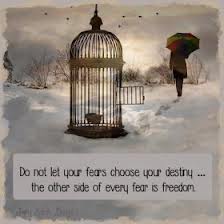
the1bigthing Do not let your fears choose your destiny

This story gave me goosebumps. There are so many important messages in it, many of which are at the core of what the1bigthing.com is all about. Traci’s parting words are especially inspiring. I know Traci personally and she is one of those people who brings light and laughter wherever she goes. The big lesson I get from this story is that there are many ways to fulfil a dream and every way can be a bit scary. That’s just part of the process.

But enough from me, here’s Tracy’s story in her own wonderful words.

What was your BIG thing?

My most recent BIG thing was to join the theatre and enter the world of stage acting.

What was your moment of truth?

Drama was something I had always held in the back of my mind as something I wanted to tackle ‘one day’. So when I flew down to Cape Town on a whim to watch my good friend in a local theatre production (she had five whole lines!) I felt that the time was right – I was inspired and couldn’t wait any longer. I gave up skydiving, my latest hobby and joined my local community theatre two years ago, at the ripe age of 41.

What was the hardest thing about following through? What helped you overcome this?

My first audition was nerve-racking. I knew absolutely nothing about the process or what to expect. I was handed a script and asked to read with people I’d never met (who themselves were no strangers to the stage) – it was daunting to say the least. I screwed up the lines a few times and felt quite jittery standing on stage with only the director watching and a few people scattered around waiting to audition for the same roles. But no matter how nervous I felt, there was also a sense of excitement. I was finally doing it, this challenge I sought of my own free will, and I was determined to see it through no matter what the outcome. The director must have seen past the nerves because I got the part!

As difficult as the audition was, I would have to say the hardest thing was when the curtain went up on my very first opening night. I thought that my heart would beat right out of my chest while I was waiting for my stage entrance, sneaking a peek at the expectant audience from the wing, saying my lines over and over in my head. Without a doubt I equate the thrill to jumping out of a perfectly serviceable aircraft!


the1bigthing - traci in action

That’s Traci on the left. She played one of the Pigeon sisters, Gwendolyn and had to cry quite hysterically in this scene.

What was a surprising outcome?

Needless to say I was quite surprised to score a role at my very first audition. Ok granted, it’s only community theatre and there weren’t hundreds of people beating down the audition door, but still I felt empowered. Equally surprising was the fact that from the outset, the rest of the cast assumed that I was a fairly seasoned actress! Nobody realized that this was my first foray into theatre. It felt good to know that I had at least a hint of talent to build on.

What advice would you give to others who are yet to start their big thing?

My advice is to forget reason and follow your intuition. Whatever you want to try in life, whatever you’d like to accomplish, when the time feels right just take that first baby step towards it and you’re already on your way. I believe that the desires within us are not there merely by chance, but rather they guide us in our life’s purpose so we should listen closely to our hearts… it is an incredible journey when we let go and just do it!

The cast & crew of “The Odd Couple”, a play by Neil Simon performed by the Franklin Players, a community theatre group based in Johannesburg

The cast & crew of “The Odd Couple”, a play by Neil Simon performed by the Franklin Players, a community theatre group based in Johannesburg http://www.franklin.org.za/


Enhanced by Zemanta
Mar 052013
 

the1bigthing.com - change how you think

In the past 15 years Psychologists have turned their attention to what makes us happy in life. The research is loud and clear, your thinking has a huge impact on this. This post looks at what the research shows is ‘good’ thinking, what is not and shows an easy way to change how you think.

A group of us were discussing the idea of luck during a workshop I was running. One participant piped up, ‘I not one of those lucky ones, I’ve never been lucky and probably never will.’

It was a typical response from someone who has a pessimistic explanatory style. The bad news for this participant is that his thinking makes him right.

When doing research for a book called ‘The Luck FactorRichard Wiseman discovered that people who considered themselves lucky in one area of their life, were usually also lucky in other areas. This led him to believe that luck is not something that occurs randomly, but instead it’s something that people create through their thinking.

Enter Martin Seligman, the father of Positive Psychology, with a fantastic explanation as to the kind of thinking that creates luck in our lives.

We’ve all heard the terms optimist and pessimist, but what do they exactly mean? Seligman studied the patterns of thinking of hundreds of individuals and noticed that people could explain events in two different ways.

Imagine you’ve thrown a dinner party and the food you’ve cooked has been exquisite. The night was a roaring success and all the guests told you how much they loved it.

If you’re an optimist you might think something along the lines of, ‘Wow I’m a great host and a great cook. I’m sure this party was the start of many great evenings with my friends. And you know what, I’m sure I can use these same skills to turn that work event I’m planning into a huge success as well.’

In other words you’ve built up the event. You’ve made it permanent (you can repeat it), you’ve made it personal (it was YOUR skills that created the success) and you’ve made it universal (you’ve applied it to other areas of your life). As a result you feel great!

If you’re a pessimist your thinking might be a little different. You might say to yourself, ‘That was a fluke. I’ll never be able to re-create that food. There was something in the air that made everyone have fun’.

In other words, you’ve played down the event. You’ve made it temporary (you cannot repeat it), you’ve made it external (you had nothing to do with the success) and you’ve kept it specific (you haven’t applied it to other areas of your life). Chances are it hasn’t given you the same boost that the optimist got.

What about when something negative happens? This is where it gets even more interesting. Seligman found that in a negative event the exact opposite happens.

Let’s imagine you’ve applied for a job and you’ve just received a rejection letter.

An optimist would think something like, ‘It was only one job, they probably needed different skills. I’m sure I’ll do better in my other applications.’

The pessimist might think, ‘This is a disaster. I’m sure I’ll be rejected in my other applications too. I’m just not good enough.’

This time the optimist has made the event temporary, external and specific, while the pessimist has made it permanent, personal and universal. As a result the optimist might shrug the incident off, while the pessimist might end up feeling very disheartened about it.

When we break down the idea of optimism and pessimism in such a way it becomes much easier to see why research shows that optimists do better at work, live longer and report more fulfilling lives.

If you like the sound of this, here’s what you can do to think more optimistically in life.

When something good happens ask yourself the following questions:

  1. What part did I play in making this a success?
  2. How can I apply these skills to other areas of my life?

When something bad happens ask yourself these questions making sure you find reasons to say NO to each question:

  1. Is this permanent?
  2. Is this widespread?
  3. Is this personal?


You might want to follow this line of questioning with:

What specific action can I take to get a better result next time?

Psychologists also recommend that we avoid ‘catastrophising’ negative events. Here are two more questions to help with that.

  1. Will this matter in 5 years’ time?
  2. What are the overall consequences? And why are these not as bad as they seem on the surface?

Hope this post helps you think more optimistically about events that happen in your life.

What current event will you apply this strategy to?

With love

Karen

x


Enhanced by Zemanta

Switch to our mobile site